

In this guide, you will find a practical and educational analysis of the best padel rackets 2026, selected for their combination of materials, feel, and key technologies that make a difference on the court. I have gathered 10 representative models of the season, from rackets focused on power to models for control and hybrid rackets designed for players seeking versatility. Each profile includes the official structure with an image, main features, and a clear summary of the technologies (12K/18K carbon faces, EVA or FOAM cores, antivibration systems, aluminum or carbon frames, rough textures on faces, and effect treatments) so you understand why they work and who benefits from them.
If you want to explore all options available in the store, visit the Padel Rackets 2026 category. Throughout the article, you will see the technical sheets of each model with a didactic summary, usage recommendations, and advantages. I also include references to technologies and, when the model is a signature or player racket, I point it out. If you need a quick read, use the product titles to jump directly to the racket that interests you. For more related articles on selection and maintenance, I recommend consulting How to choose your racket 2026.
Table of Contents
Collection Summary: What these rackets seek in 2026
The 2026 collection reflects three clear trends: increased use of high-density carbon layers (12K and 18K) to enhance tactile control, cores with new-generation foams to combine ball exit and comfort, and reinforced frames with profiles that optimize the sweet spot without sacrificing stability. Power rackets tend to have diamond or hybrid shapes with a high balance; control rackets maintain round or hybrid shapes with 18K faces and rough textures for effect. In this section, you will see one profile per model with its image and main features.
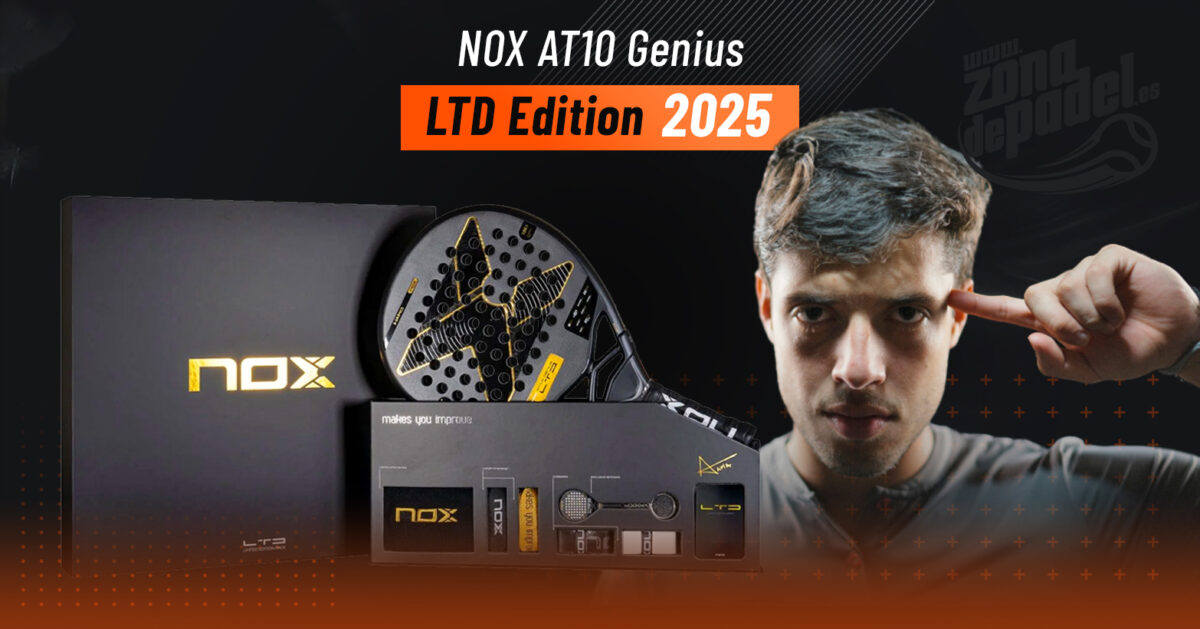
Nox AT10 Luxury Genius 12K Alum Xtrem 2026

- Shape: Tear drop
- Play style: Versatile
- Weight: 360-370
The Nox AT10 Luxury Genius 12K is the evolution of the AT10 line, the signature of Agustín Tapia. It stands out for its 12K carbon Xtrem face, which aims to provide a more progressive and controlled feel without losing attacking capacity. The frame includes an “Alum” reinforcement for increased rigidity and stability on smashes. It features a high-recovery EVA core that aids ball exit. The weight profile favors the head, typical for players seeking power.
Advantages:
- Great ball exit on smashes and powerful bandejas.
- Controlled feel thanks to 12K carbon and reactive core.
- Player signature: ideal for offensive players who value a power sensation.

Babolat Air Viper 26 2026

- Shape: Diamond
- Play style: Power / Light
- Weight: 355-365
The Babolat Air Viper 2.6 is a racket designed for shot speed: lightweight structure, aerodynamic profile, and faces with carbon fiber for quick recovery. It incorporates Babolat technologies aimed to reduce vibrations and increase precision in fast hitting. Ideal for players looking for explosiveness and agile movements at the net.
Advantages:
- Very manageable and fast in direction changes.
- Good balance between power and control due to its light composition.
- Perfect for players who prioritize speed over absolute head weight.
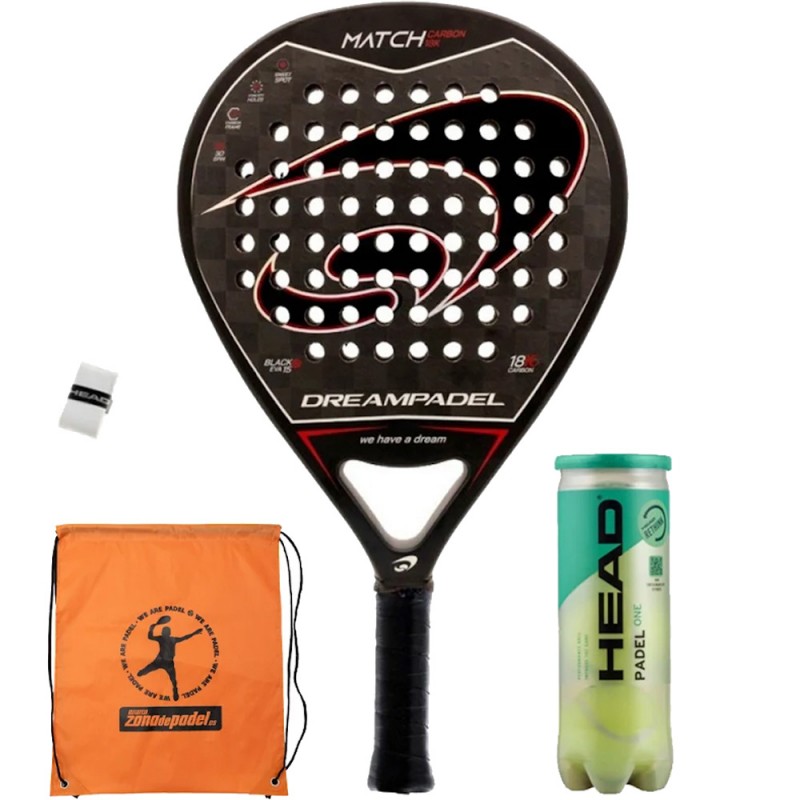
DreamPadel Match Carbon 18K 2026
- Shape: Tear drop
- Play style: Versatile
- Weight: 360-365
The DreamPadel Match Carbon 18K is a racket in this TOP for its value for money, a model that bets on a classic balance: 18K face for higher stiffness and precision, round shape for a wide sweet spot, and a core that prioritizes control on volleys and low balls. It is a solid option for players seeking consistency in placed shots and a feeling of security.
Advantages:
- Excellent control and feel in placement play.
- Wide sweet spot that helps minimize unforced errors.
- Good response in defensive and counterattack shots.

Siux Fenix Pro Glow Purple 2026
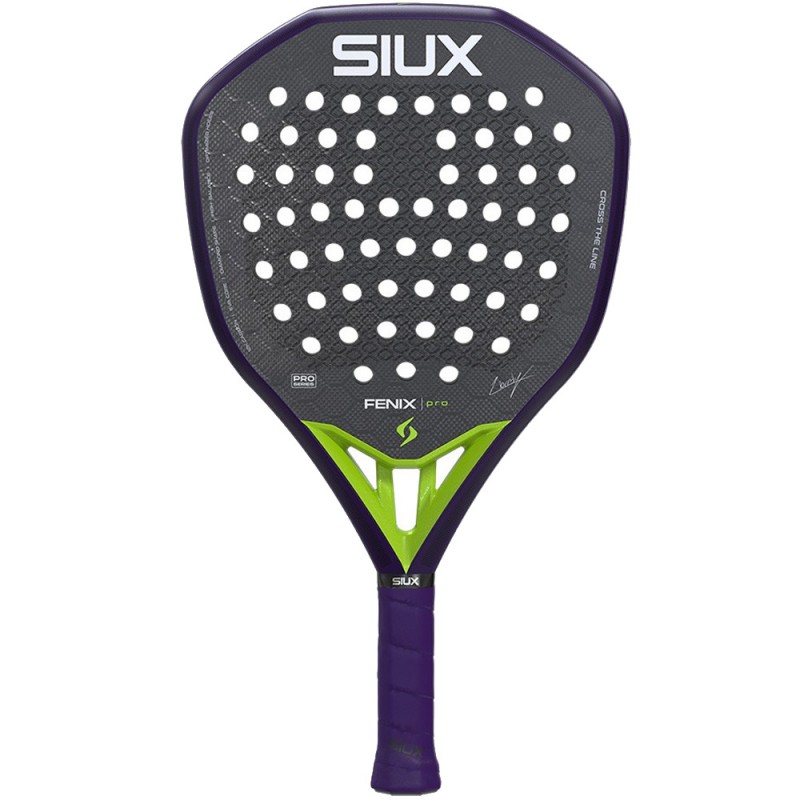
The Siux Fenix Pro stands out for its aesthetics and for offering a balanced feel for players who alternate defense and attack. Faces with texture for effect, core with medium-density foam, and reinforced frame that provides stability on smashes. A good option for those looking for a power racket but with very good maneuverability.
Advantages:
- Great versatility: comfortable in defense and effective in attack.
- Face texture designed to improve effect on lifted shots.
- Good overall feel for intermediate and advanced players.
Babolat Technical Viper Soft 30 2026

- Shape: Diamond
- Play style: Power
- Weight: 360-370
The Technical Viper Soft 30 model combines a power profile with a softer core to increase comfort and reduce vibrations. Technology aimed at improving feel on strong impacts and facilitating recovery during intense matches. Suitable for players who want to hit hard without sacrificing joint comfort.
Advantages:
- Good balance between power and comfort thanks to the soft core.
- Vibration reduction on off-center hits.
- Recommended for long sessions and players with elbow/shoulder sensitivity.
Bullpadel Vertex 05 2026

The Vertex series by Bullpadel continues focused on players looking for power in every shot. High rigidity materials, profiles optimized for stability, and faces with rough treatment for effect. The design is aimed at competitors needing a reliable racket for smashes and high-demand situations.
Advantages:
- Maximum power and stability on smashes.
- Face treatments to improve effect on offensive shots.
- Construction designed for competitive use.
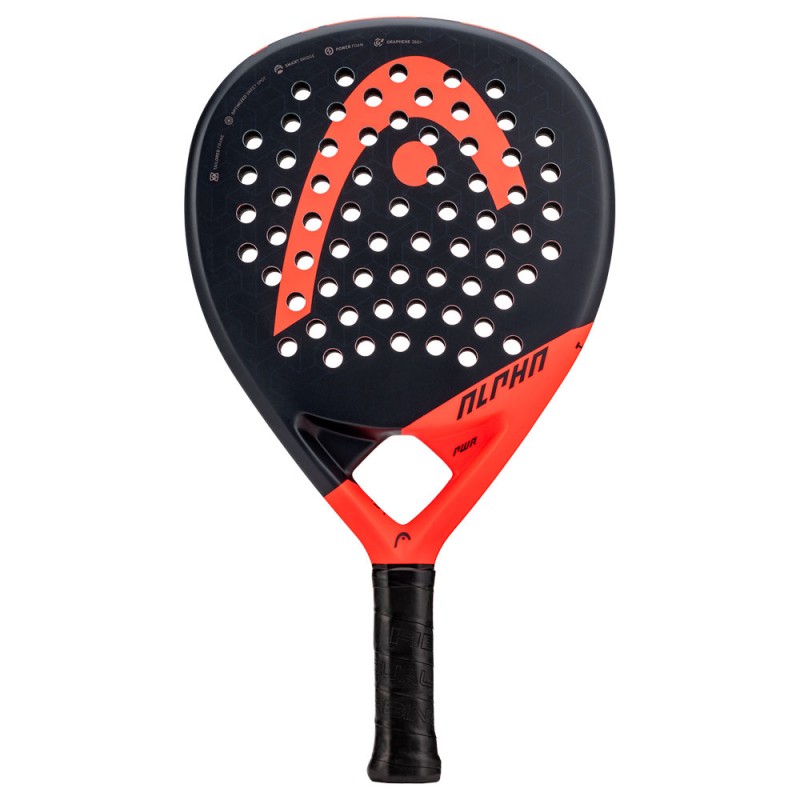
Head Graphene 360 Alpha Power 20 2026
- Shape: Diamond
- Play style: Power
- Weight: 360-370
The Head Graphene 360 Alpha Power 2.0, the second racket in this top by value for money, integrates Graphene 360 technology for a structure seeking balance between torsion and rigidity. Shape and balance oriented to power, with treated faces and a core aimed at explosive ball exit. It’s a solid choice for players needing decisive smashes.
Advantages:
- Excellent for power shots thanks to balance and rigidity provided by Graphene 360.
- Good stability on impact, less frame deformation.
- Proven design for players with an offensive mindset.
Adidas Metalbone 2026
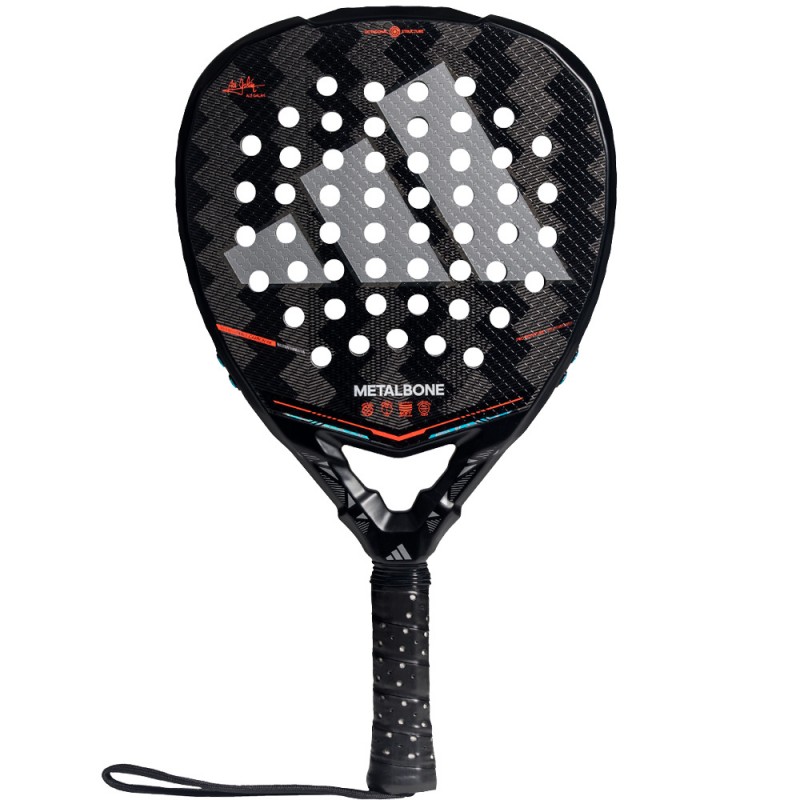
The Adidas Metalbone 2026 continues the tradition of a racket aimed at maximum performance, with metallic elements or reinforcements that deliver a hard feel on impact. Its hybrid profile favors power without totally sacrificing control; it includes face treatments to provide effect and improve ball deviation on lifts and cross shots.
Advantages:
- Aggressive balance for very powerful smashes.
- Good feeling of solidity on every impact.
- Designed for players demanding maximum response in attack.
Head Coello Pro 2026
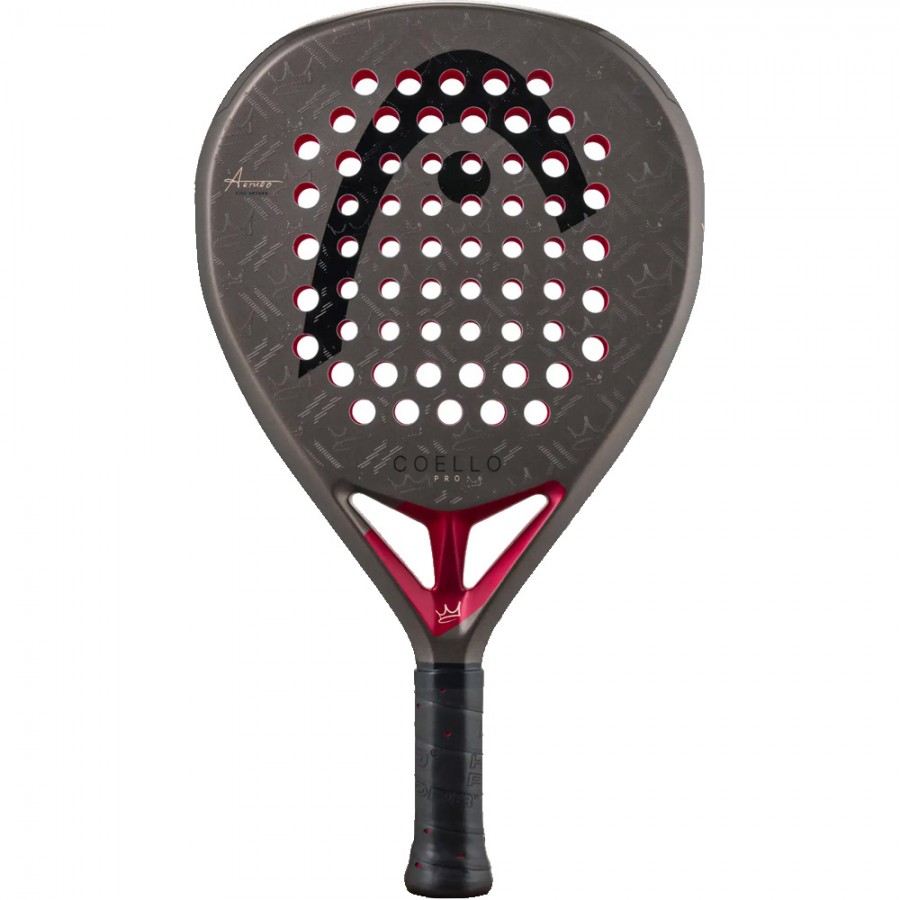
The Head Coello Pro is a signature racket (Coello) oriented 100% to power. Diamond shape with balance towards the tip to impart maximum force on aerial hits. The Coello Pro 2026 is a hard racket but with a reactive touch, giving much more ball exit on offensive shots but slightly penalizing control on volley clashes.
Advantages:
- Excellent power and feeling on placed shots.
- Comfort and less force needed to finish points.
- A good option for technical players who dominate the court with aerial shots.
Nox Future Hybrid 12K Alum 2026
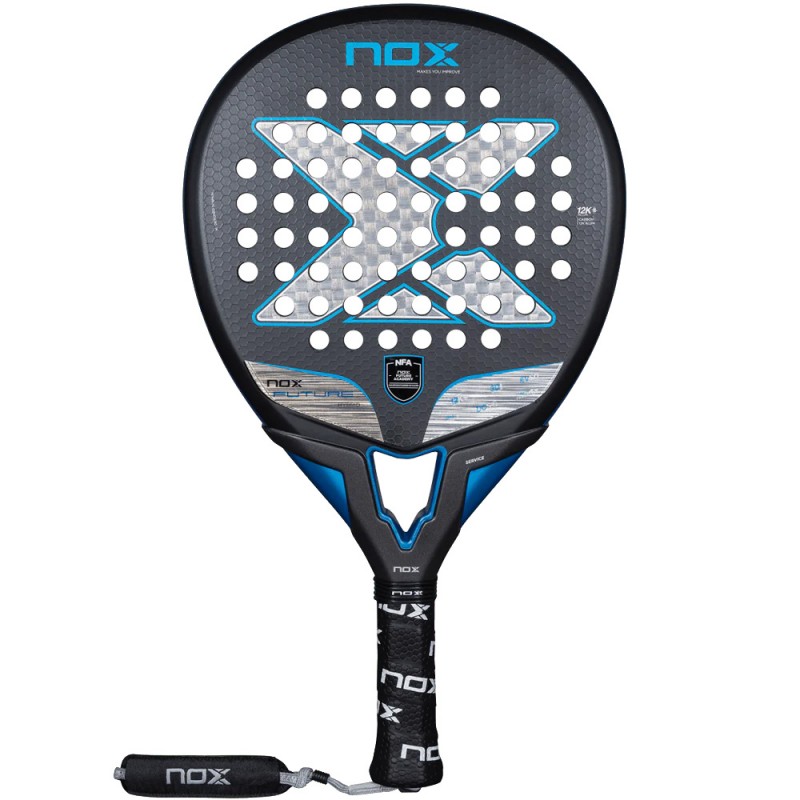
- Shape: Hybrid
- Play style: Versatile
- Weight: 365-375
The Nox Future Hybrid 12K, the latest value-for-money model in this top best padel rackets 2026, aims to offer the best of both worlds: 12K carbon for a more progressive feel, Alum-reinforced frame for stability, and a hybrid shape that facilitates both baseline and net play. It is designed for players who alternate styles and want a single racket for almost everything.
Advantages:
- Great versatility: adaptable to different playing styles.
- Modern feel with enough control for defense and attack.
- A good choice for players who don’t want to change racket depending on the situation.
Decide your 2026 racket: conclusions to choose the best padel racket
Choosing the best padel racket 2026 depends on your style and priorities: if you seek maximum power, choose rackets with diamond shape, head-heavy balance, and rigid faces (for example, Vertex or Metalbone models); if you prefer control and placement, opt for round or hybrid shapes with 18K faces and softer cores (DreamPadel Match Carbon or Head Coello Pro). Versatile rackets (Nox Future Hybrid, Siux Fenix Pro) are the best alternative if you want a single racket for different situations.
Also consider your ideal weight and ergonomics: lighter rackets favor maneuverability and lower injury risk, while heavier rackets boost smash power. Review the described technologies in each profile (carbon type, core, frame reinforcements, and face texturing) to decide wisely.
Which racket from this list is best if my goal is absolute power?
If your goal is absolute power, choose a racket whose construction prioritizes several technical factors: diamond shape (or hybrid with high balance), head-heavy balance, very rigid faces (high-density carbon layers), and a frame designed to minimize torsion on strong impacts. Highlighted models in the article include Bullpadel Vertex 05 2026, Adidas Metalbone 2026, Head Graphene 360 Alpha Power 20 2026, and Nox AT10 Luxury Genius 12K (signature of Agustín Tapia) as references for players seeking maximum smash power.
Why do these rackets perform well in power? They combine faces with compact fibers (greater surface rigidity), high-recovery EVA cores or specific formulas that return energy very fast, and frames with reinforced profiles that avoid energy loss due to torsion. Additionally, rough treatments on the face can help control ball direction even at high speeds. However, this setup has costs: the sweet spot tends to be narrower, tolerance on off-center hits decreases, and vibration transmission to the arm increases.
Practical advice: if you are a player with good smashing technique and an offensive role in the pair, these rackets will enhance your game. If you have a history of elbow discomfort or prefer reactivity and maneuverability, consider “soft” versions or models integrating antivibration systems. Adjusting the weight — for example, preferring a mid-range weight or adding grams on the handle — can help balance power and control. Finally, test them on court at least two sessions to check the real feel with your usual shots; the technical sheet is indicative, but the playing sensation determines the choice.
How do 12K and 18K faces affect control, power, and feel in practice?
The terms 12K and 18K refer to the carbon fabric construction and have a real impact on racket feel and behavior, although they are not the only factor. Generally, a 12K face uses thicker filament towels, usually generating a more progressive and slightly cushioned feel. This greater capacity for controlled deformation can translate into a more “enveloping” touch, greater comfort in off-center hits, and, combined with a reactive core, a perceived comfortable ball exit for many players.
By contrast, the 18K face features a finer and more compact fabric, resulting in a stiffer surface and more immediate response on impact. This behavior favors precision, stability in demanding shots (volleys, blocks), and reproducibility of direction. In summary: 18K usually helps control and ball fixing; 12K adds feel and some comfort.
However, the practical difference largely depends on the whole set: the interaction between face (12K/18K), core (EVA/foam), balance, and frame design defines ball exit and final feel. For example, a racket with 18K face but a soft core can offer an interesting balance between control and ball exit; a 12K face with a hard core can surprise with its power. Surface treatments (textured for effect), frame rigidity, and antivibration systems also influence.
Recommendation: don’t rely solely on the 12K/18K label — assess the racket as a whole and, if possible, try it on court to feel differences in slow, dynamic shots and smashes; this is where distinctions are best appreciated.
What effect do different cores (hard EVA, medium, soft foam) have on performance and joint health?
The core largely determines the response of a racket. We can distinguish hard, medium, and soft/foam cores, each affecting ball exit, control, vibration transmission, and therefore fatigue and injury risk. A hard core (EVA High Recovery or similar) deforms less on impact and returns energy quickly, usually translating into greater power and immediate response on smashes. This benefits players seeking punch but increases vibration transmission to the arm and can be less forgiving on off-center shots.
Medium cores balance ball exit with control and comfort and are popular in versatile rackets or models aimed at a broad audience. Soft or foam cores allow greater deformation, absorb more energy, and offer a more enveloping feel; this reduces vibration transmission and is more comfortable for players who train for many hours or have a history of epicondylitis or other discomforts. Modern foams are designed to minimize traditional power loss associated with soft surfaces, offering a more competitive ball exit than previous generations.
From a health perspective, if you have elbow problems or pain after long sessions, choosing a softer core or a racket with damping systems is sensible. You can also reduce vibration transmission with thicker overgrips or specific bridge protectors. If you seek maximum power and have no injury history, a harder core may be appropriate, as long as you accompany your choice with technical and physical work to reduce overload risk.
In sum: test rackets with different cores over several sessions and evaluate both performance and accumulated fatigue as well as elbow/shoulder feel. The correct choice balances immediate performance and long-term sustainability.
Should I choose a hybrid/versatile racket or specialize in control or power?
The decision between a versatile (hybrid) and a specialized racket depends on your role on the court, level, and goals. Hybrid rackets, like the Nox Future Hybrid 12K or Siux Fenix Pro in our selection, are designed to offer a balance between maneuverability, ball exit, and control. They are ideal for recreational, intermediate players and for those who do not want to carry two different rackets depending on the situation. They usually have a wide sweet spot and a construction that tolerates off-center hits, facilitating technical learning and adaptation to different playing styles.
Specialized rackets aim to maximize one quality: control rackets (usually round with stiffer faces and medium/soft cores) optimize placement, minimize unforced errors, and suit players looking for tactical dominance; power rackets (diamond shape, high balance, and stiff faces) maximize ball exit and facilitate direct smashes, at the cost of lower tolerance and sometimes less maneuverability. For advanced players with defined roles (e.g., main hitter of the pair), a specialized racket can make the difference in key points.
Practical strategy: if you do not yet have a clearly defined style or play in varied contexts, start with a hybrid and evolve to a specialized racket when your game requires it. Another option for regular players is to have two rackets: one versatile for training and one specialized for competition. Whatever your decision, test rackets on court and consider parameters like weight, balance, and core type to ensure the racket fits your needs, not just the “control” or “power” label.
How to compare 2026 models with their previous versions, and when is it worth upgrading my racket?
Annual updates in rackets tend to be incremental: changes in fiber arrangement and type (such as transitions to 12K/18K or layer orientation variations), new core formulas (more reactive foams), redesigned frame profiles to widen the sweet spot, and incorporation of antivibration technologies or rough treatments. Comparing a 2026 model with its predecessor involves assessing if these changes improve aspects that affect you as a player.
Practical steps to evaluate an upgrade: 1) Review the technical sheet and detect specific changes (fabric type, density, new foam name, balance modification, bridge reinforcements). 2) Ask if those innovations address a limitation you experience (e.g., excessive vibrations, lack of ball exit, or small sweet spot). 3) If possible, test the new version on court against your current racket; many improvements are only noticeable in real play dynamics.
When is it worth changing? If you compete frequently and every nuance affects results, the 2026 incremental improvements (greater sensitivity, better controlled ball exit, less vibration) can justify investment. If your current racket works well and causes no problems, waiting or changing only when there is a clear technical difference is more rational. Another reason to upgrade could be wear: loss of core properties, microcracks on faces, or frame deformations reduce performance.
In summary: upgrading is justified if the improvements directly tackle a personal limitation, if your racket’s wear is significant, or if you compete at a level where those details make a difference. If in doubt, try the new version in a demo and compare sensations before deciding to buy.